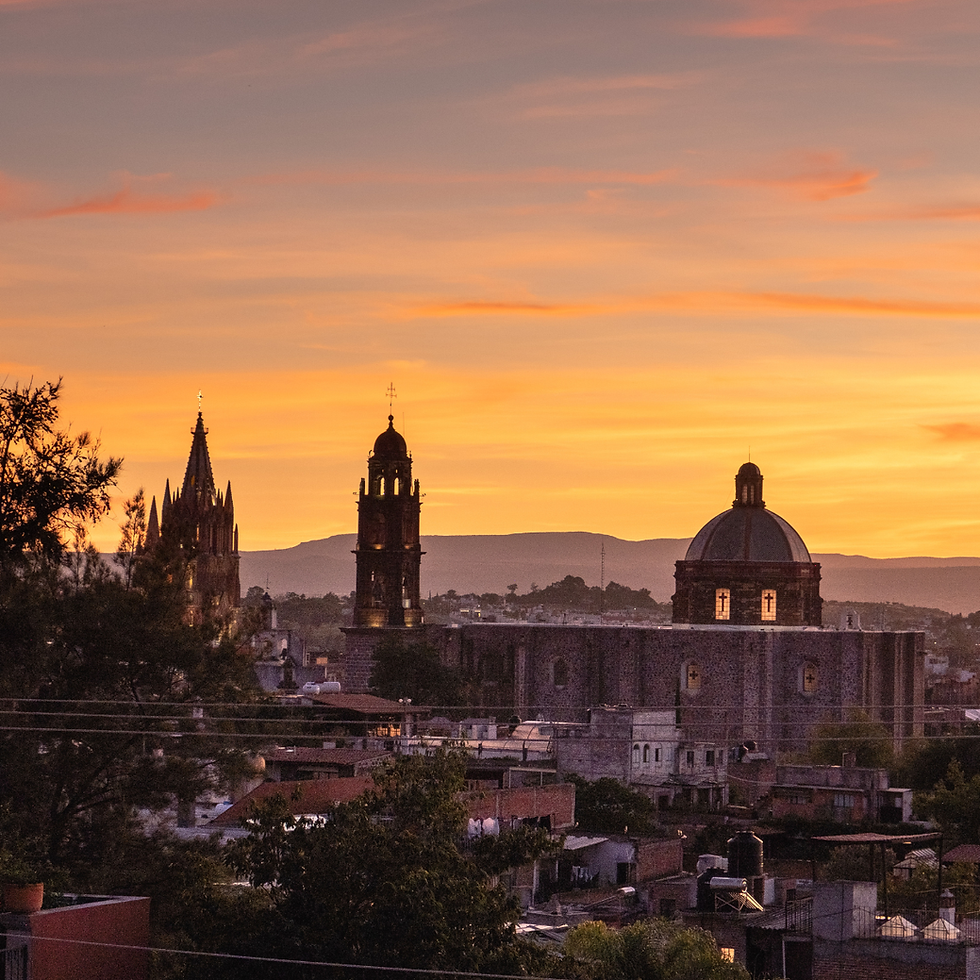
Historic Culture in San Miguel de Allende: Architecture, Traditions, and Holidays

Understanding the Historic Character of San Miguel de Allende
San Miguel de Allende is widely recognized for its historic architecture and cultural traditions. The city’s streets, buildings, and public celebrations reflect centuries of history shaped by indigenous communities, Spanish colonial influence, and modern cultural preservation.
For residents and visitors alike, understanding this historical background provides useful context for why the city looks and functions the way it does today.
Architecture: Why the City Looks the Way It Does
Much of San Miguel’s architectural identity developed during the colonial period between the 16th and 18th centuries, when the region was an important economic center in New Spain.
Colonial Foundations
Many buildings in the historic center were constructed during Spanish colonial rule. These structures commonly include:
Thick masonry or adobe walls
Central courtyards (patios)
Interior gardens or fountains
Stone streets and plazas
The city’s layout reflects traditional colonial planning, with a central plaza surrounded by churches, civic buildings, and residential streets.
Practical Architectural Design
In addition to aesthetics, many traditional design elements serve practical purposes suited to the local climate.
Examples include:
Thick adobe walls, which help regulate interior temperature
High ceilings, allowing heat to rise and improve ventilation
Interior patios, which provide natural light and airflow
These features were common in colonial-era architecture across central Mexico.
Distinctive Visual Features
Homes and buildings in San Miguel often include recognizable architectural elements such as:
Rooftop terraces (azoteas) used for outdoor living
Wrought-iron balconies and window grilles
Carved wooden doors
Colorful exterior facades and tiled roofs
Many of these features remain visible in neighborhoods such as Centro Histórico, Guadiana, and San Antonio.
Indigenous and Colonial Cultural Influence
The visual and cultural character of San Miguel reflects a combination of indigenous traditions and Spanish colonial design.
Indigenous Influence
Before the Spanish colonial period, the region was inhabited by indigenous groups including the Otomi and other Chichimeca communities.
Their influence can still be seen in:
Traditional artisan crafts
Textile patterns and decorative motifs
Local building techniques and materials
Colonial Influence
Spanish settlers introduced European architectural styles and urban planning principles. These included:
Baroque church architecture
Formal public plazas
Decorative stonework and tiled roofs
Over time, these elements blended with indigenous craftsmanship to create the distinct architectural identity seen throughout the city today.
Major Holidays and Cultural Traditions
San Miguel’s historic traditions are most visible during public celebrations held throughout the year. These events combine religious customs, community gatherings, and cultural performances.
Día de los Muertos (Day of the Dead)
Celebrated in early November, this holiday honors deceased family members through:
Home and public altars
Marigold flowers and candles
Parades and cultural events
La Alborada
La Alborada is a traditional celebration held each September, associated with the feast of Saint Michael the Archangel. The event typically includes fireworks, music, and early morning festivities.
Independence Day Celebrations
Mexican Independence Day, celebrated on September 15–16, includes:
Civic ceremonies
Public gatherings in plazas
Fireworks and music
Markets and Artisan Traditions
In addition to major holidays, everyday cultural life in San Miguel is reflected through:
Artisan markets
local food traditions
craft workshops and galleries
These activities maintain many traditions that have been present in the region for generations.
Historic Culture Snapshot
Topic | Key Elements | Locations |
Architecture | Colonial homes, adobe walls, rooftop terraces | Centro, Guadiana, San Antonio |
Indigenous Influence | Artisan crafts, decorative motifs | Markets and artisan districts |
Colonial Influence | Baroque churches and central plazas | Historic center |
Major Holidays | Día de los Muertos, La Alborada, Independence Day | Centro and public plazas |
Key Takeaways
San Miguel de Allende’s historic character reflects centuries of cultural development.
Architecture reflects both colonial design and practical responses to climate.
Cultural traditions continue through festivals, markets, and everyday community life.
Neighborhood location influences how closely residents experience these historic elements in daily life.
For many residents, the combination of architecture, public traditions, and community events contributes to the city’s distinct cultural identity.