History of Restaurants and Culinary Evolution in San Miguel de Allende

Food as Part of Daily Life in San Miguel de Allende
The dining culture of San Miguel de Allende did not appear suddenly. It developed over time, beginning with local kitchens, neighborhood fondas, markets, bakeries, and family-run restaurants that served the city long before San Miguel became an international destination.
What changed over the last several decades was not the existence of food culture, but its visibility and range. As tourism expanded and the international population grew, the restaurant scene also broadened. Traditional Mexican cooking remained central, but it began to coexist with more contemporary kitchens, rooftop venues, wine programs, and restaurants shaped by chefs trained in other parts of Mexico and abroad.
Today, San Miguel’s culinary identity is one of the city’s most visible cultural features. The official tourism apparatus now treats gastronomy as a core part of the destination, and in 2024 the city government announced that San Miguel had received Food and Travel’s recognition as Mexico’s best gastronomic destination.
The Earlier Foundation: Local Restaurants, Markets, and Everyday Food
The first layer of San Miguel’s restaurant history is not luxury dining. It is everyday food.
For generations, the city’s culinary life depended on modest establishments serving regional dishes, breakfasts, market food, tacos, sweets, and meals built around the habits of local families rather than visitors. That foundation still matters. Even as the city’s dining scene has expanded, local markets and long-running eateries continue to anchor daily food culture.
This is one reason the restaurant scene in San Miguel feels layered rather than invented. Newer restaurants did not replace an empty landscape. They were added to an existing food tradition already tied to community life, plazas, and neighborhood routines.
Rooftop Dining and the Modern Centro Experience
One of the clearest changes in San Miguel’s culinary evolution has been the rise of rooftop dining.
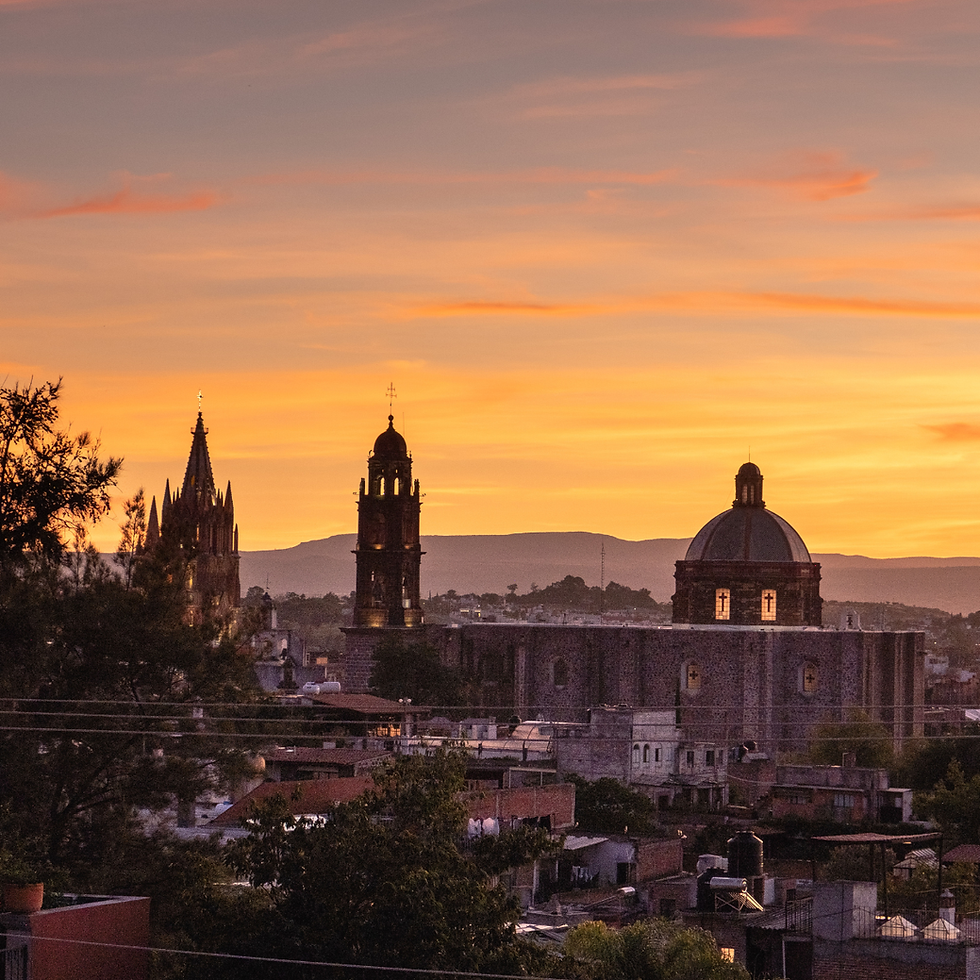
In practical terms, rooftops turned the city’s architecture into part of the restaurant experience. Historic buildings in Centro often already had terraces or upper levels. As tourism increased, these spaces became places for lunch, dinner, cocktails, and live music, often with direct views of the Parroquia and the surrounding colonial skyline.
This did not create San Miguel’s food culture, but it did reshape how the city presents it. Dining in the historic center became not only about the meal, but about atmosphere, walkability, and the visual experience of the city after sunset.
For residents, this changed social life as much as tourism. Restaurants became gathering spaces tied to the rhythm of the historic center, especially in walkable areas where cafés, bars, and terraces can be reached on foot.
International Influence and Culinary Expansion
As San Miguel attracted more international residents, artists, retirees, and short-term visitors, the restaurant scene expanded accordingly.
What emerged was not a rejection of Mexican cuisine, but a broader range of styles operating alongside it. Italian, French, Mediterranean, Asian, and contemporary Mexican kitchens became more common. Farm-to-table menus, tasting formats, wine pairings, and chef-driven concepts also became more visible.
That pattern reflects the city itself. San Miguel has long combined local tradition with outside influence. The restaurant scene now mirrors that same balance: regional cooking remains essential, while international techniques and ingredients have expanded the range of what is available.
This development is also consistent with the city’s broader cultural institutions. San Miguel’s reputation for arts and culture is supported by places such as Instituto Allende, the Biblioteca Pública, Fábrica La Aurora, and public gathering spaces such as Parque Juárez, all of which reinforce the city’s identity as a place where cultural life and daily life overlap.
Festivals, Tourism, and Culinary Visibility
Tourism has played a major role in making the city’s restaurant culture more visible and more ambitious.
San Miguel’s annual calendar includes literary events, arts programming, holiday celebrations, and food-centered gatherings that bring visitors into the city throughout the year. One example is Millesime GNP Weekend, which lists its fifth San Miguel edition for May 21–24, 2026 at the Rosewood. Events of this kind reinforce the city’s position not only as a historic destination, but as a place where food has become part of the cultural offering.
That matters because restaurants in San Miguel do not function in isolation. They are tied to walkable tourism, art districts, public celebrations, and the broader experience of the city. A visitor may come for architecture, festivals, or galleries and then encounter the restaurant scene as part of the same experience.
Culinary Landmarks and Cultural Geography
Several places help explain how food and culture intersect in San Miguel.
Parque Juárez is not simply a park; official tourism materials describe it as a community gathering place that hosts weekend artists and cultural and gastronomic events. Instituto Allende remains an active art center with workshops and long institutional continuity. The Biblioteca Pública continues to operate as a cultural center with classes and events. Fábrica La Aurora, after decades as a textile factory, now houses galleries, studios, restaurants, and design spaces.
This matters because San Miguel’s culinary history is not only about individual restaurants. It is also about where those restaurants sit within the city’s cultural map. Dining near galleries, parks, courtyards, and public events is part of what gives the restaurant scene its particular character.
Why the Restaurant Scene Matters to Residents
For residents, the importance of San Miguel’s culinary evolution is practical as much as aesthetic.
A strong restaurant culture affects daily routines. It shapes where people meet friends, how they use Centro, which neighborhoods feel active after dark, and which areas are attractive to part-time residents or visitors. In walkable neighborhoods such as Centro, Guadiana, and parts of San Antonio, access to cafés and restaurants often contributes to the broader appeal of living there.
That should not be overstated into a promise about property values. But it is reasonable to say that a mature dining scene contributes to lifestyle quality, neighborhood activity, and the city’s year-round attractiveness.
Final Thoughts
San Miguel de Allende’s culinary reputation rests on more than trend or tourism. It developed from an older base of local food traditions and expanded over time as the city became more international and more culturally visible.
What exists now is a layered dining culture: traditional kitchens, market food, cafés, rooftop venues, chef-driven restaurants, and food festivals all operating within the same historic city.
That combination helps explain why restaurants in San Miguel feel less like an accessory to tourism and more like part of the city’s identity.