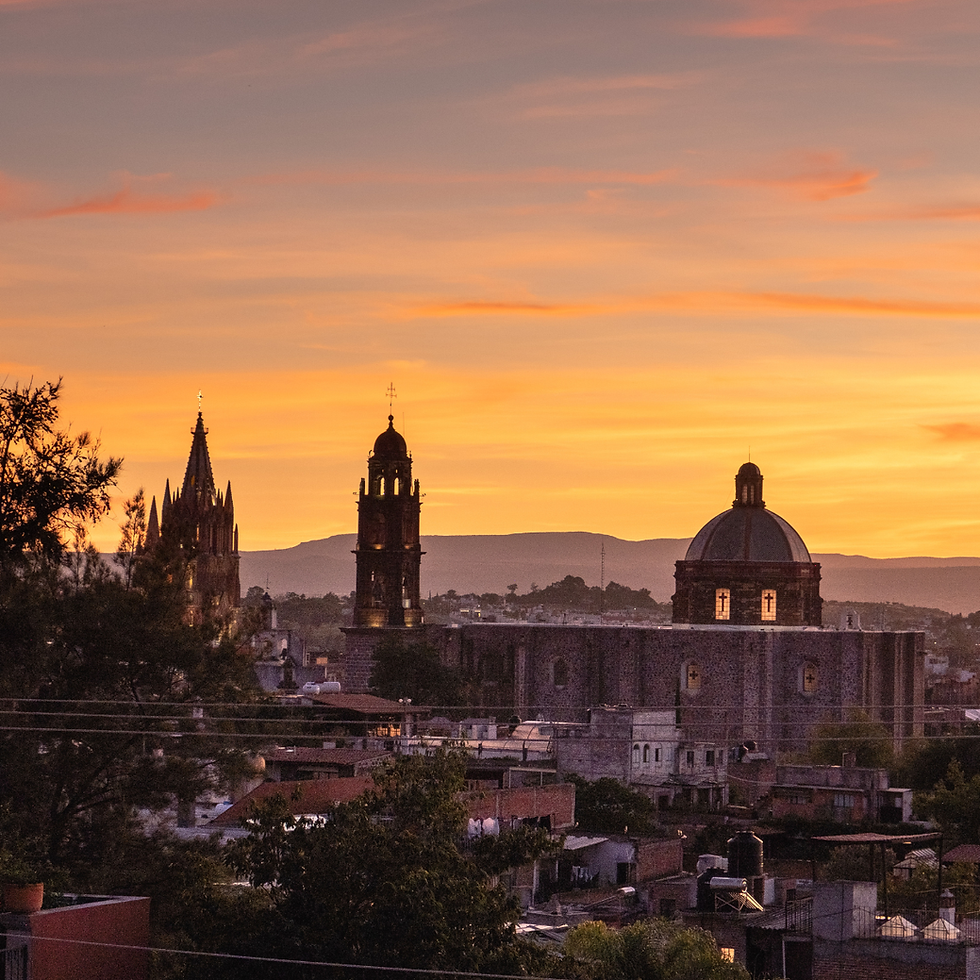
The Life of the Jardín (Plaza Principal) in San Miguel de Allende

The Jardín Principal — usually referred to simply as el Jardín — has long served as the central gathering place in San Miguel de Allende. Like the main plaza in many colonial Mexican towns, it was designed as both a civic and social space.
Over time the square has reflected the broader changes in the city itself. While the buildings surrounding it have remained largely consistent, the rhythm of daily activity has gradually evolved as San Miguel transitioned from a small regional town into an international cultural destination.
Understanding how the Jardín has changed over time helps explain the character of the city today.
The Jardín Before Modern Tourism
(Colonial Period through Early 20th Century)
In Spanish colonial cities, the central plaza was intentionally placed at the center of the urban grid. Government buildings, churches, and commercial activity were arranged around it so that civic, religious, and daily life would converge in the same location.
San Miguel followed this pattern. The Jardín sits directly in front of the Parroquia de San Miguel Arcángel, with the municipal palace and surrounding arcades completing the square.
During earlier periods of the city’s history, activity in the plaza was primarily local. The square functioned as a meeting point for residents, markets, religious gatherings, and public announcements.
Daily life often included:
Families gathering in the plaza during evenings
Church-related celebrations and religious processions
Public ceremonies and civic events
Informal social conversations beneath the laurel trees
The current appearance of the plaza also reflects 19th-century redesigns. During that period, landscaping and iron benches were introduced, along with a central music kiosk — elements influenced by French garden design that became common in Mexican public plazas.
The Jardín During the Mid-20th Century
Residents who experienced San Miguel several decades ago often describe a different tempo in the plaza compared with today.
Before the growth of international tourism, the Jardín functioned largely as a neighborhood meeting place. While visitors were present, the square remained primarily part of daily life for residents.
Common scenes during that period included:
Mariachi musicians or local bands playing near the kiosk
Vendors selling snacks and handmade goods to local families
Children playing in the plaza during evenings
Groups of neighbors sitting on benches and talking for long periods of time
This atmosphere resembled the traditional Mexican town square — a place where the community gathered regularly without formal programming or tourism infrastructure.
The Jardín Today
Today the Jardín continues to serve the same basic function, although the mix of people and activities has expanded.
San Miguel’s international reputation has brought a steady flow of visitors, and the plaza now reflects both local and tourist activity. Despite this change, it remains a central meeting point for residents.
A typical day in the Jardín now includes:
Residents resting in the shade beneath the laurel trees
Visitors photographing the Parroquia and surrounding buildings
Street musicians performing during afternoons and evenings
Vendors selling snacks, balloons, crafts, and traditional foods
Public celebrations, parades, or concerts during holidays and festivals
Rather than replacing the plaza’s traditional role, tourism has added another layer of activity to an already active civic space.
The Rhythm of the Jardín Throughout the Day
Morning
The early hours tend to be quiet. Residents pass through the plaza on their way to work, and some people sit briefly on benches with coffee or newspapers.
Morning light also highlights the pink stone façade of the Parroquia, making the square feel calm and reflective.
Midday
Activity gradually increases as pedestrians move through the center of town. Visitors explore the area while vendors begin setting up near the edges of the plaza.
Musicians sometimes begin playing during these hours, adding background sound to the movement through the square.
Afternoon
By late afternoon the plaza becomes noticeably more active. Families arrive, street vendors increase, and musicians or performers become more visible.
Children often play near the garden paths while people gather in small groups to talk.
Evening
Evenings are traditionally the most social period. Music often plays from the kiosk, and the plaza becomes a meeting point before or after dinner.
Lights from the surrounding buildings and the illuminated Parroquia give the square a distinctly festive atmosphere, especially during weekends or holidays.
Why the Jardín Remains Important
Even as San Miguel has changed, the Jardín continues to perform the same essential function it always has: it is the city’s primary shared public space.
Its importance lies in several factors:
Community continuity Generations of residents have used the plaza as a place to meet, talk, and observe daily life.
Cultural gatherings Many festivals, public celebrations, and civic events still begin or pass through the Jardín.
Public accessibility Unlike private venues, the plaza remains open to everyone — residents, workers, visitors, and families alike.
Because of this, the square continues to serve as one of the clearest reflections of how the city lives day to day.
Summary: The Changing Life of the Jardín
Period | Character |
Colonial through early 20th century | Local civic and social center |
Mid-20th century | Community gathering place with mostly local activity |
Today | A mix of residents and international visitors |
Daily rhythm | Quiet mornings, active afternoons, social evenings |
Final Thoughts
Although San Miguel de Allende has grown significantly in reputation and population, the function of the Jardín has remained surprisingly consistent.
It continues to operate as the city’s primary public meeting place — a space where residents, visitors, and traditions intersect. Watching the daily rhythm of the plaza often provides a clearer understanding of the city than any guidebook or description.